Cleaning out a loved one's home can be one of the most emotionally and physically difficult responsibilities a family faces.
There may be decades of belongings to sort through.
Important documents. Family photographs. Furniture. Clothing. Tools. Kitchenware. Holiday decorations. Collections.
Every room can contain something meaningful—and every decision seems to lead to another.
Whether you're managing an inherited home in Bel Air, settling an estate in Fallston, or preparing a property for sale in Havre de Grace, having a clear plan can make the process more manageable.
At Harford Junk Removal – Wee Haul Junk, we help families with the physical side of property cleanouts, allowing them to focus on the decisions that matter most.
Quick Answer: How Do You Clean Out an Estate in Harford County, MD?
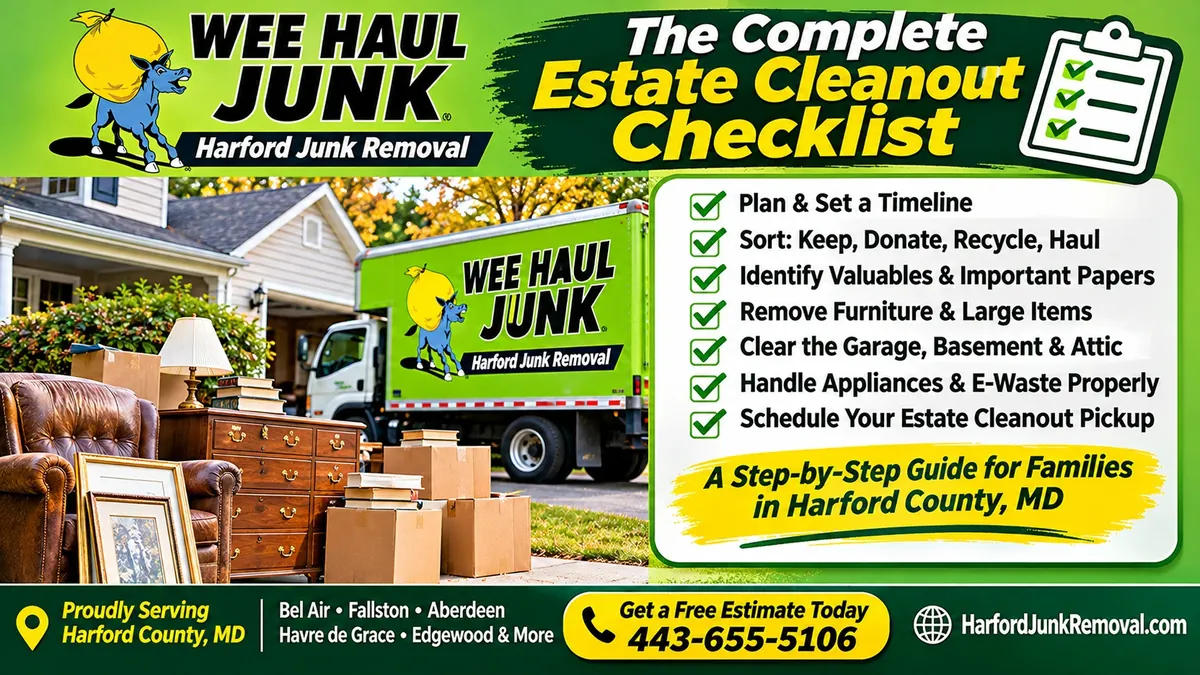
Start by confirming who has authority to manage the estate and identifying assets, valuables, and important documents. Then separate belongings into keep, distribute, donate, recycle, and dispose categories. Once the family and estate representative approve removal, a professional estate cleanout company can clear unwanted furniture, appliances, and household contents.
For estate cleanout hauling in Harford County, call Wee Haul Junk at 443-655-5106.
Step 1: Confirm Who Has Authority to Manage the Property
Before anyone starts emptying rooms or removing valuable items, determine who is legally authorized to make decisions.
In Maryland, the personal representative of an estate is generally responsible for administering probate assets.
The authority to distribute or dispose of property can depend on the will, probate status, ownership arrangements, and other circumstances.
Family members should avoid assuming that every belonging can be removed simply because a house is being sold or has been inherited.
The Maryland Register of Wills provides official guidance on estate administration.
If ownership or authority is uncertain, consult the estate attorney or personal representative before scheduling substantial removal.
Step 2: Locate Important Documents Before Removing Anything
One of the biggest mistakes families can make is treating old paperwork as ordinary trash.
Before clearing a home, search carefully for:
- Wills and trust documents
- Deeds and mortgage information
- Bank and investment statements
- Insurance policies
- Tax records
- Vehicle titles
- Military records
- Birth, marriage, and death certificates
- Personal identification documents
- Business ownership records
- Keys, passwords, and account information
Check desk drawers, filing cabinets, closets, safes, storage boxes, and other locations where paperwork may have been kept.
Important documents can be mixed with newspapers, photographs, and miscellaneous household clutter.
Secure sensitive information and arrange appropriate destruction of documents that are no longer needed.
Step 3: Identify Valuables and Items That May Require Appraisal
Not everything that looks like ordinary household clutter is worthless.
Before authorizing disposal, check for jewelry, collectible coins, antiques, valuable artwork, specialty tools, collections, and other potentially significant property.
If you are uncertain about the value of an item, have it evaluated before giving it away.
Maryland Estate Inventory Considerations
For regular estate administration, Maryland generally requires the personal representative to prepare and file an inventory within three months of appointment, subject to applicable rules and procedures.
Estate inventory requirements may affect how property should be identified, valued, and documented before distribution or disposal.
The estate's real estate valuation is a separate issue from the physical removal of furniture and household contents.
A junk removal company handles approved hauling and disposal. It does not replace legal advice, estate administration, or professional appraisal services.
Step 4: Create a Five-Category Sorting System
Once important documents and potentially valuable property are secured, the next step is organizing the remaining belongings.
A simple system can reduce confusion.
| Category | What belongs here |
|---|---|
| Keep | Family photographs, keepsakes, important personal items |
| Distribute or sell | Items designated for heirs or approved for sale |
| Donate | Usable furniture, clothing, and household goods |
| Recycle | Eligible metals, cardboard, electronics, and appliances |
| Remove | Broken, unusable, or unwanted household items |
Label the categories clearly.
For larger estates, it may help to designate one room for items that will remain in the family.
Avoid moving everything into the garage without a plan—you may simply create a second cleanout project.
Step 5: Communicate With Family Members Before Disposing of Belongings
Estate cleanouts can become complicated when several family members have different expectations.
One person may want to keep a dining room table.
Another may believe it should be sold.
Someone else may want photographs, tools, or family heirlooms.
Before removing items:
- Confirm which items are designated for particular beneficiaries
- Document important decisions
- Photograph questionable belongings
- Set reasonable review dates
- Obtain approval from the authorized estate representative
Written records can be helpful when relatives live outside Maryland or cannot participate in person.
A clear process may prevent misunderstandings and unnecessary conflict.
Step 6: Decide What Can Be Donated
Many estates contain furniture and household goods that are no longer needed but remain in usable condition.
Depending on their condition and a receiving organization's policies, possible donation items may include:
- Sofas and chairs
- Tables and dressers
- Kitchenware
- Small appliances
- Books
- Clothing
- Household accessories
Confirm that a charity will accept the specific items before arranging delivery.
Do not assume every charity accepts mattresses, upholstered furniture, large appliances, or all electronics.
Wee Haul Junk emphasizes donation and recycling when practical, helping reduce unnecessary landfill disposal.
If an estate needs donation receipts for recordkeeping, discuss documentation requirements before scheduling removal.
Step 7: Separate Items Requiring Special Disposal
Some items should not be placed with regular household junk.
Watch for:
- Refrigerators and freezers: Refrigerant-containing appliances require appropriate handling.
- Televisions and computer monitors: These may have different disposal rules from ordinary recyclable electronics.
- Paints and solvents: Certain chemicals and hazardous materials require specialized disposal.
- Propane cylinders and fuel: These should not be placed in standard junk loads without approved handling.
- Medical and personal information: Medications, sharps, and sensitive records require proper disposal procedures.
Harford County's official waste disposal resources can help families identify acceptable items and special handling requirements.
Step 8: Arrange Professional Removal of Large Household Items
Once the family has identified everything it wants to retain, the physical cleanout can begin.
This is often where hiring professional help makes the biggest difference.
A home may contain:
- Heavy bedroom furniture
- Large sectional sofas
- Mattresses and bed frames
- Refrigerators and washing machines
- Basement storage items
- Garage clutter
- Old outdoor furniture
- Unwanted office equipment
Moving these items may require multiple people, suitable equipment, and transportation.
Wee Haul Junk provides full-service estate cleanout hauling throughout Harford County.
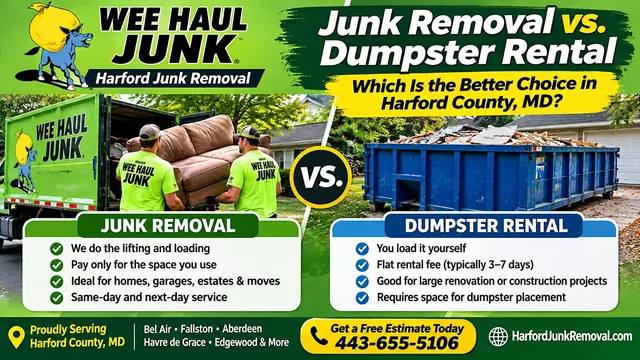
A free estimate can help the authorized representative understand the removal scope and costs before work begins. To see how pricing works, read our Harford County junk removal pricing guide, and if you are weighing a rental container, see junk removal vs. dumpster rental.
Step 9: Prepare the House for Sale or Transfer
Many estate cleanouts take place because the property is going to be sold or transferred.
After unwanted belongings have been removed, evaluate whether the house is ready for the next stage.
Consider the following:
- Are the rooms clear enough for inspection?
- Can a real estate agent photograph the property?
- Are basement and attic areas accessible?
- Has the garage been emptied of unwanted items? (See our garage cleanout cost guide.)
- Are personal documents and valuables secured?
- Have obvious trip hazards been removed?
- Are there remaining repairs or professional cleaning needs?
Junk removal is one step in preparing a house for sale.
It does not substitute for repairs, cleaning, legal title work, probate requirements, or an independent property valuation.
However, removing unwanted belongings can make the next phase much easier.
Step 10: Schedule a Final Walkthrough
Before turning over the property or authorizing the last removal, inspect each area carefully.
Pay particular attention to:
- Closets
- Built-in cabinets
- Attics
- Crawl spaces, where safely accessible
- Basement storage rooms
- Garages
- Outdoor sheds
- Kitchen drawers
- Furniture compartments
Families sometimes discover important items in unexpected places.
A final walkthrough helps reduce the risk of accidentally discarding belongings that should have been retained.
How Much Does an Estate Cleanout Cost in Harford County?
There is no single fixed price for every estate cleanout.
The cost depends on:
- Home size and contents: An almost-empty condominium is different from a furnished four-bedroom home.
- Amount of unwanted material: The number of truckloads affects hauling requirements.
- Access: Stairs, long carrying distances, and difficult rooms can influence labor.
- Heavy or special items: Large appliances, bulky furniture, and certain materials can require extra handling.
- Scope of services: Straightforward removal differs from a project requiring extensive sorting or multiple appointments.
Wee Haul Junk provides free upfront estimates so families can understand their specific costs before approving the work.
Estate Cleanouts for Out-of-State Executors
Many people responsible for settling a Harford County estate no longer live nearby.
A family member might live in Pennsylvania, Virginia, Delaware, Florida, or elsewhere in the country.
Traveling repeatedly to sort and remove unwanted belongings can become expensive and stressful.
Professional hauling can help reduce the number of trips required.
When arranging a cleanout remotely, discuss:
- Who can authorize the work
- How the items will be identified
- Whether photographs are needed
- How access will be provided
- What confirmation will be supplied after completion
- How payment will be handled
Wee Haul Junk advertises options for coordinating certain pickups without the customer being physically present, subject to access and confirmation arrangements.
Why Harford County Families Choose Wee Haul Junk
An estate cleanout involves more than loading a truck.
It often happens during a difficult transition, when a family has many decisions to make and limited time to handle them.
Wee Haul Junk helps with the practical work of removing approved unwanted items.
Services include furniture removal, appliance hauling, household cleanouts, garage and basement clearing, and responsible disposal.
The company serves Bel Air, Fallston, Forest Hill, Aberdeen, Havre de Grace, Edgewood, Joppatowne, Jarrettsville, Darlington, and other Harford County communities.
Frequently Asked Questions
Who is responsible for cleaning out an estate in Maryland?
The authorized personal representative generally manages the administration of probate assets. Actual responsibilities may depend on estate documents, property ownership, and legal requirements.
Can belongings be removed before probate is complete?
Some actions may be permitted, but property should not be disposed of without proper authority. Confirm the situation with the personal representative or estate attorney.
How much does a full estate cleanout cost?
Costs depend on the amount and type of belongings, accessibility, labor, and hauling capacity required. Wee Haul Junk provides free estimates.
How long does an estate cleanout take?
A small, lightly furnished home may be substantially easier to clear than a fully occupied house with an attic, basement, and garage. Completion time depends on the actual scope.
Can furniture from an estate be donated?
Usable furniture may be accepted by donation organizations, depending on its condition and current acceptance policies. Obtain authorization before donating estate assets.
Can an estate cleanout be scheduled without the executor being there?
Some pickups may be coordinated remotely when the authorized person provides access, clear instructions, and approval. Confirm arrangements directly with the hauling company.
Does estate cleanout service include removing appliances?
Wee Haul Junk advertises removal of refrigerators, washers, dryers, and other household appliances, subject to applicable handling requirements.
Let Wee Haul Junk Handle the Heavy Lifting
Settling an estate can require difficult decisions, emotional conversations, paperwork, deadlines, and property responsibilities.
You shouldn't have to handle every physical task alone.
Once the important belongings have been identified and removal is authorized, Wee Haul Junk can help clear the unwanted furniture, appliances, and household contents.
📞 Call 443-655-5106 for a Free EstimateYour family handles what matters most. Wee Haul Junk handles the heavy lifting.